

1912
On an unseasonably cold June evening in Kinsley, a large group of people began amassing.
They arrived in the latest automobiles, by horse and buggy, on the train, and even on foot. The gathering, five hundred strong, brimmed with enthusiasm despite the strangely chilly weather and filled the outdoor theatre space with an anxious buzz; soon, this crowd would see an outdoor amateur production of William Shakespeare’s A Midsummer Night’s Dream.
A dignified rancher and banker, Rufus Eugene Edwards, watched the event unfold along with his wife, Lizzie, a socialite and thirty-year resident of the small Kansas town, adorned in a luxurious coat. Nearby, a younger couple, Jouett and Marion Edwards Shouse, smiled equally with intrigue and pride. Their opulent wedding a year earlier had been billed as the social event of the century. However, now it seemed that Marion’s brother, Charlie, had somehow created an even more striking and noteworthy image imprinted in Kinsley’s collective memory.
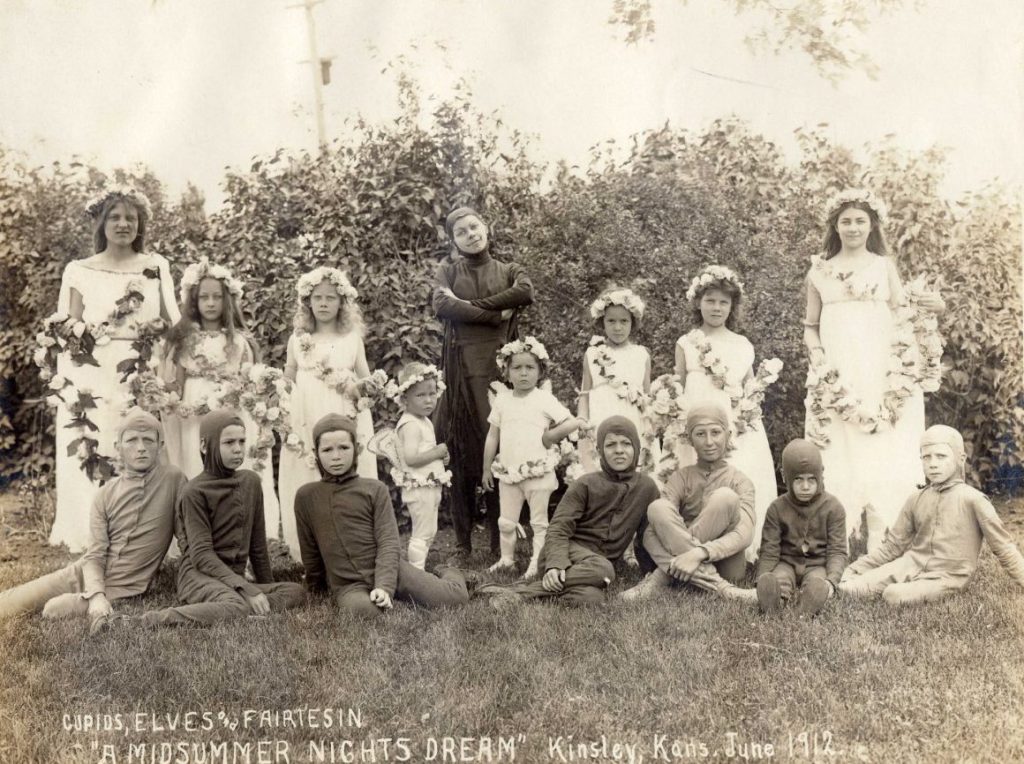
The Fairies in Kinsley, Kansas’s 1912 production of “A Midsummer Night’s Dream.” Courtesy of the Kinsley Public Library.
Colorfully costumed townspeople waited in the wings between twinkling trees. Music from a small orchestra reached out to the audience across a small brook that separated the onlookers from the action. In the meantime, a fairy legion, amassed behind the audience, began flitting down the center aisle to charm the gathering. This magical band congregated as the music played on; they filed onto a one-hundred-fifty-foot stage lined with electric footlights shrouded in artificial shrubbery.
The production’s handsome, seventeen-year-old scenic designer, Tom Mairs, glanced at the mesmerizing picture and then at the hundreds of people assembled around the stage. He would have seen reporters furiously taking notes, parents fawning, and visitors staring in awe. Tom had always looked up to Charlie, but this accomplishment exceeded everyone’s wildest expectations. He took his position and prepared for the play.
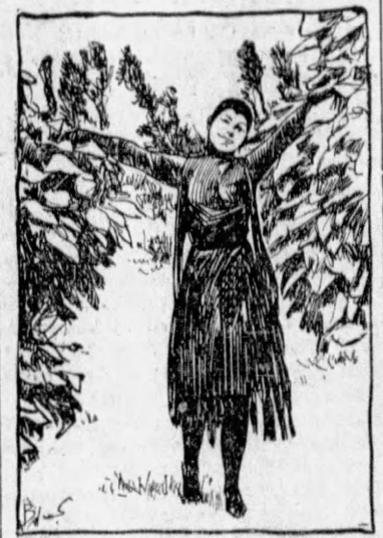
The music suddenly stopped as a flame-colored will-o’-the-wisp shot like an ember across a specially designed “fairy bridge,” grasping the crowd’s attention. This mythical sprite, played by local dancer Persis Colie (left) dressed in oranges and reds, cackled in “elfin glee” while commanding the stage. Then, a trumpet sounded as the Athenian Duke Theseus entered with his betrothed, Hippolyta, and their many attendants. Later, Charlie emerged into the sylvan surroundings, dressed in an extravagant tunic as Oberon, King of the Fairies, drawing upon formal training he received over a decade earlier.
By donning an ass’s head, Gilmor Brown completed their impactful duo as Bottom the weaver. Gilmor’s character took the lead role amid a group of “rustic mechanicals,” a group of amateurs used to toiling with their hands rather than their minds. Their group was attempting to put on a play before the Duke of Athens’ nuptial day. As Kansan farmers watched the agrarian amateur actors playing agrarian amateur actors, the lines between reality and the stage blurred. A reporter visiting from hundreds of miles away remarked:
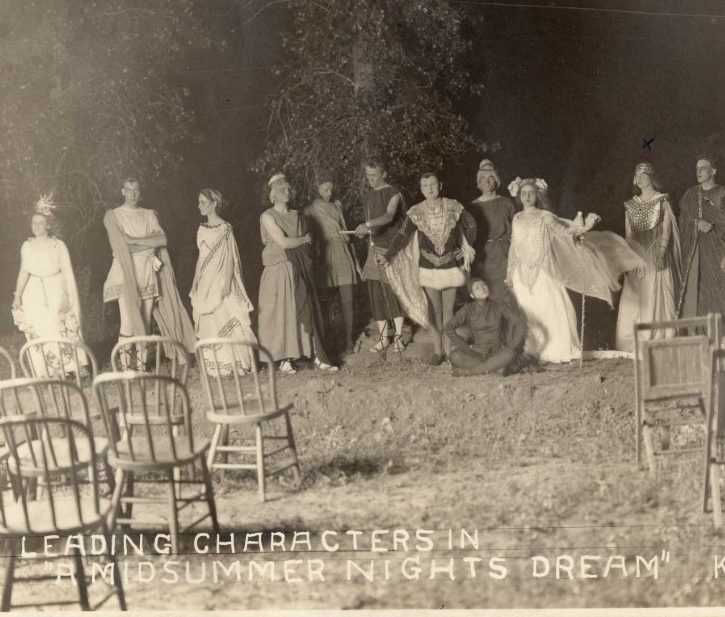
“nature seemed to have formed that bit of woods especially for a theater.”
So what was it, a stage or a forest? Some even believed that maybe, just maybe, the toddler actors were not children at all but, rather, fairies.[i]
More next week on this production’s immediate impact on the Kinsley community, and how it inspired Charlie and Gilmor to think on a larger scale!
[i] Kansas City Star, 9 Jun 1912; Hutchinson Gazette, 9 Jun 1912.

 Community Arts Uncovered
Leave a comment