

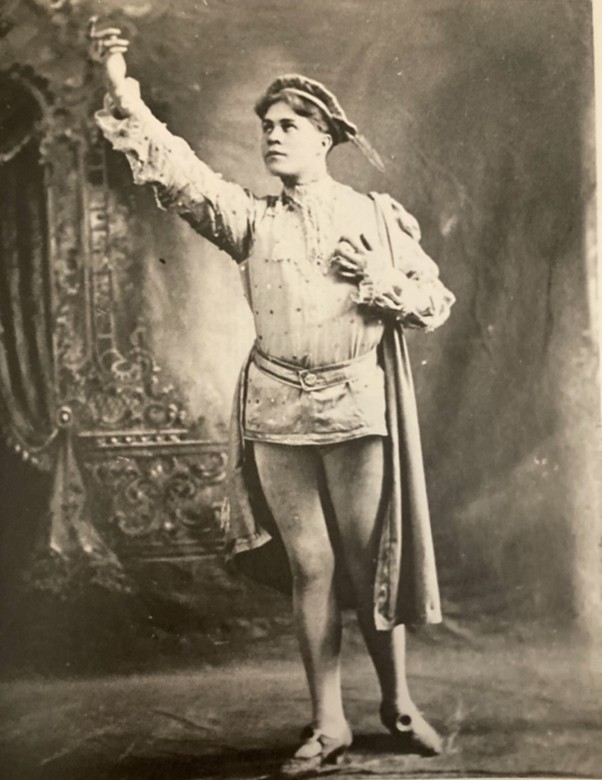
The future Pasadena Playhouse Founder performs “As You Like It” in Kinsley in 1908.
It was Saturday evening, the 11th of April, 1908. A large audience filed into Flohr’s Opera House in Kinsley, Kansas. Ready for just another play, local theatre critic and newspaper editor, Charlie Edwards, settled into his seat. As the first line flowed into his ears, “As I remember, Adam…” he must have realized this Shakespeare play would be something altogether different. The actor playing Orlando, the play’s charming, lovesick protagonist, continued his declamation, “it was upon this fashion bequeathed me by will but poor a thousand crowns.” Charlie approved of this actor; his presence seized his concentration. This actor was handsome, too. The program revealed the player’s name was Gilmor Brown.
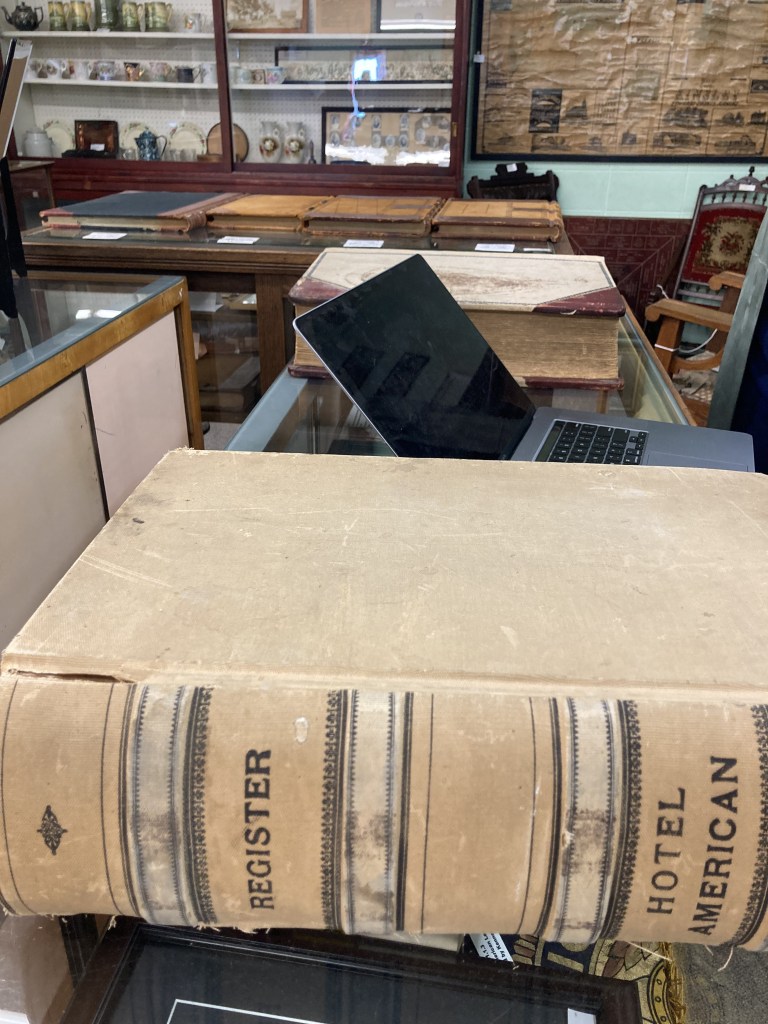
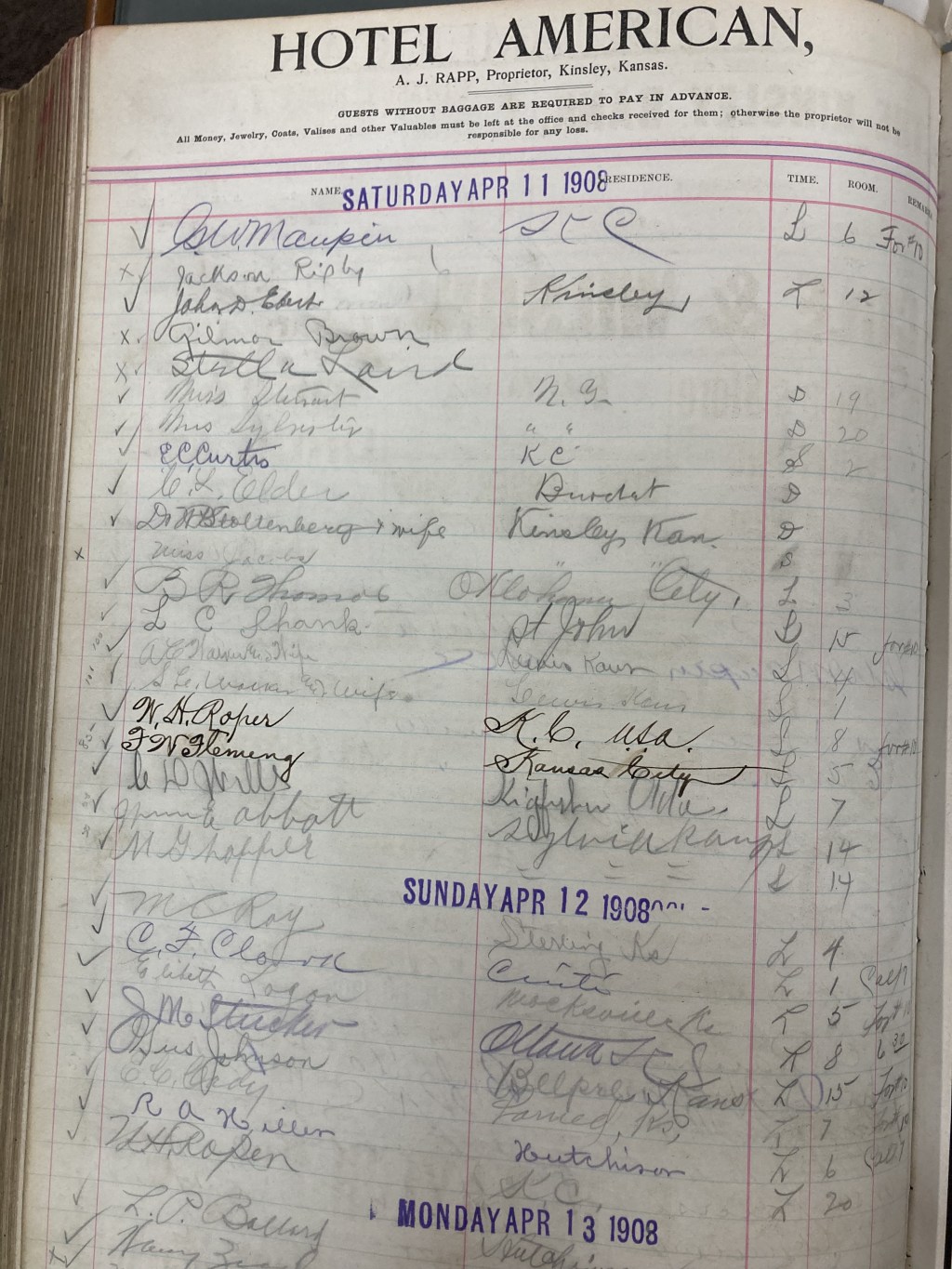
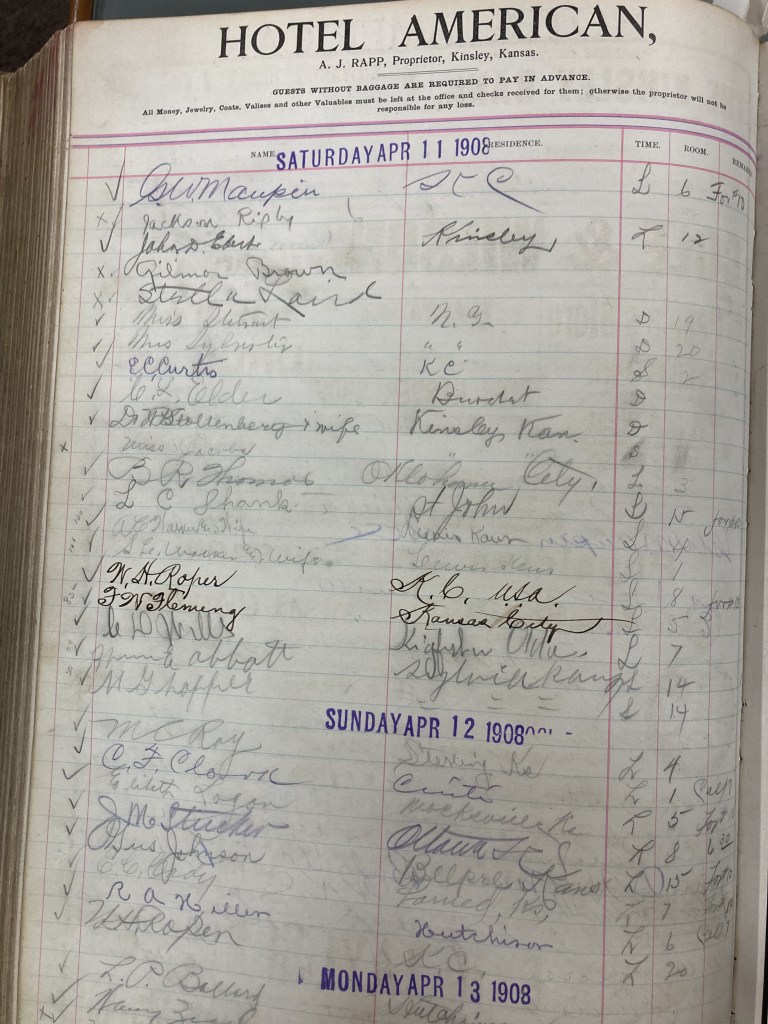
Gilmor Brown and his company had arrived earlier that day, which we know not only because of Charlie Edwards’ thorough theatre review or because of the various announcements in the newspapers, but also because of hotel registries, like the one from the Hotel American, managed by A J Rapp, preserved at the Edwards County Historical Society Museum in Kinsley.
During my last visit, to celebrate the publication of The Hidden History of Kinsley with co-author Joan Weaver at the museum, we found Gilmor’s name (along with some other exciting ephemera – to be uncovered in future weeks) recorded here. This registry preserves a pivotal but previously lost moment in theatrical history. Gilmor’s performance in Kinsley marked the first time the aspiring professional actor performed in town. It would not be his last. He would continue to return for the next six years; and while in Kinsley’s vibrant artistic community, Gilmor learned the skills to build America’s most successful community theatre, the Pasadena Community Playhouse.
Fortunately, we do have much more from Gilmor’s first visit than a simple signature, and the time he arrived on that day in April 1908. The Kinsley Mercury, Charlie’s newspaper, preserves his impressions of this Shakespearean performance. His nuanced review exhibited appreciation for having a Shakespeare company in Kinsley, as amateurs had not yet attempted the exalted plays (outside of Charlie’s one-man Macbeth from the previous decade). Charlie’s favorites included Gilmor’s Orlando, of course, and the actors playing Audrey and Oliver, who were somehow “at all times with the picture” despite the script’s contrary requirements. Conversely, May Stewart, the star and the company owner, received a lukewarm response.
Nevertheless, her chosen role and supporting cast enhanced her performance: “Miss Stewart is a capable actress–no actress could fail as ‘Rosalind’–and her support in several instances pushed her for honors.” The Mercury was not finished with the production, however. Charlie noted that “everything done by Miss Mae Guyer,” who played Celia, was best described as a “crudity.” Also, Charlie found Gilmor’s wrestling partner from the opening act to resemble a risqué underwear model. Despite these “minor offenses,” Charlie gave an overall positive review, with only a few exceptions:
May Stewart’s rendition of Shakespeare’s beautiful comedy, As You Like It was enjoyed by a large audience at the Kinsley Opera House last Saturday night. The production was superior to the usual show that strikes town, and manager Baxter is to be commended for public spirit in risking a loss, which we are glad he did not sustain, in bringing it here. The piece was not without its crudities, among which may be mentioned everything done by Miss Mae Guyer, who was cast as “Celia”, and “Charles the Wrestler’s” resemblance to the young man in the backs of the magazines who comes might near making a bare living by advertising the Ypsilanti underwear. But these were minor offenses. Miss Stewart is a capable actress- no actress could fail as “Rosalind” – and her for support in several instances pushed her for honors. Mrs. Jane Sylvester as “Audrey”, Mr. Gilmor Brown as “Orlando”, and Mr. Jackson Rigby as “Oliver” were at all times within the picture. Shakespeare never wrote more beautiful lines nor penned a broader, more universal philosophy than in As You Like It and the players in this instance were in accord with his gay, pastoral spirit. The Mercury hopes Mr. Baxter will book other companies of the May Stewart grade. – Charlie Edwards
Gilmor, on the other hand, was impatient as May Stewart’s occasional leading man. The tepid notice she earned from Charlie was not uncommon. Audiences did not believe that she fit the image of Shakespeare’s young star-crossed lover when she took the part of Juliet, with one paper’s stinging review: “It is hard for one to imagine the tender and loving ‘Juliet’ with one so mature and blasé.” The brutal review continued, “The scenery and costumes looked as though they had seen better days.”[3] Gilmor wanted out, and after two seasons with the May Stewart, he jumped ship and worryingly, set out on his own. But he would return to Kinsley, and the decision to do would change America’s entertainment history.
Subscribe to Community Arts Uncovered to learn how Gilmor’s decision to venture out on his own would impact film and theatre in the United States.
Sources
[1] Charlie’s review is from 17 Apr 1908, Kinsley Mercury, Kinsley, KS
[2] Hotel American Register 1908. 11 Apr 1908. Edwards County Historical Society, Edwards County Museum and Sod House.
[3] 30 Sep 1909, Asheville Citizen-Times, Asheville, NC

 Community Arts Uncovered
Leave a comment