

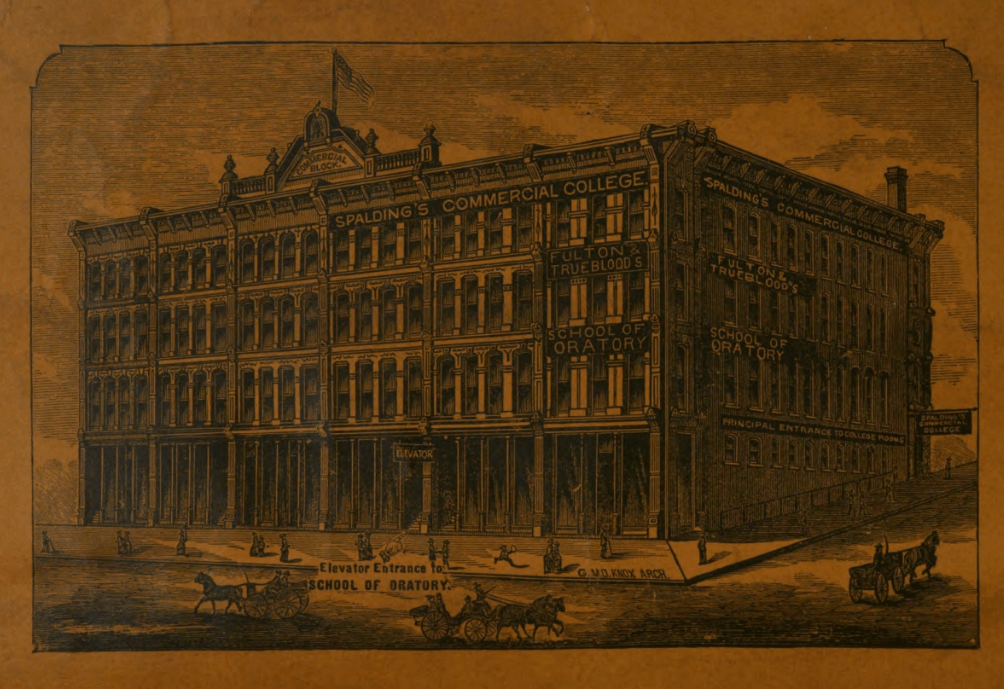
A Foundation for Elocution and Shakespeare Studies for Preston Dillenbeck
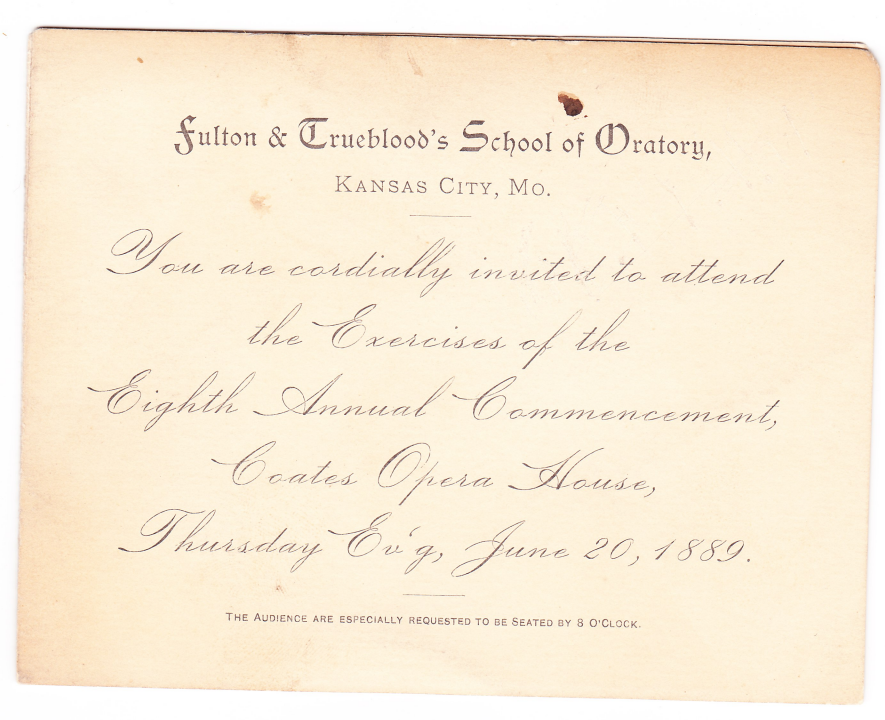
The above 1889 invitation to a graduation ceremony tells the story of an era that placed the highest value on eloquence. Speaking was not simply for communication; it was an art form. To glimpse this world, I’ll begin by uncovering the forgotten impact of Preston K Dillenbeck and his education with Fulton & Trueblood.
The silver-tongued Preston Dillenbeck knew Kansas City well. In the early 1880s, the alluring winds of prosperity brought him from Amsterdam, New York, intent on realizing his budding dreams of oratorical distinction. As the city matured into the bustling metropolis it was destined to be, the young Dillenbeck also put down roots. He enrolled in a school operated by Robert Irving Fulton, who, at age twenty-seven, was only four years his senior.
Fulton’s training with famed actor and elocutionist James Edward Murdoch at a Virginia law school launched his career in public education as a superintendent of schools in rural Berlin, Illinois. In 1881, the former school administrator relocated to Kansas City for better opportunities and opened the Kansas City School of Oratory with fellow elocutionist and former classmate of Murdoch, Thomas Clarkson Trueblood.
As the population in the West steadily grew, the desire to have cultural education of the type Fulton offered began to bear fruit. Kansas City offered the ideal location for the enterprise of oratorical education. Aspiring actors and instructors found their way to the young city that teemed with theatrical energy. [i]
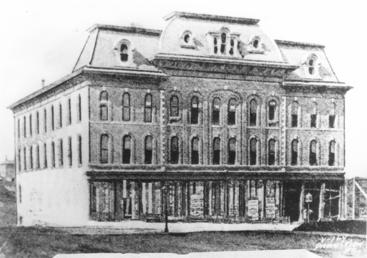
Dillenbeck blossomed into one of Fulton’s star pupils. The critics wrote that he spoke with “a clear, bell-like voice, combined with considerable dramatic power.” Consequently, he continued to gain employment in oratorical functions.[ii] Finally, in July 1885, on the revered stage of Coates Opera House, Professors Fulton and Trueblood handed Preston K Dillenbeck and his classmates diplomas. Graduating alongside Dillenbeck was future Shakespearean leading lady, May Stewart. [iii]
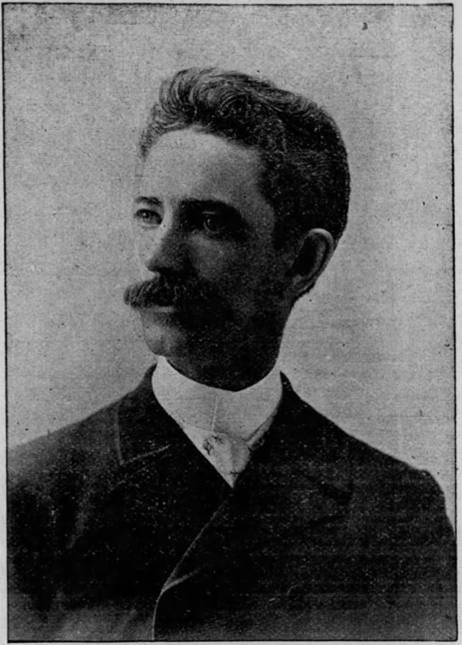
The recent graduate did not have to search long for employment. Fulton selected his former pupil to be an instructor at the School of Oratory, and this move could not have come at a better time. The school was expanding. By 1888’s fall term, Fulton and Trueblood (pictured here) moved their operation into rooms specially designed for their use in the YMCA building on Ninth and Locust Streets. This building, which boasted “elegant” rooms for their purposes, was not inconsequential. President Cleveland placed the cornerstone for this culturally and politically anointed edifice only a year earlier. The YMCA building would be the home for seventy-six students studying the art of public speaking.
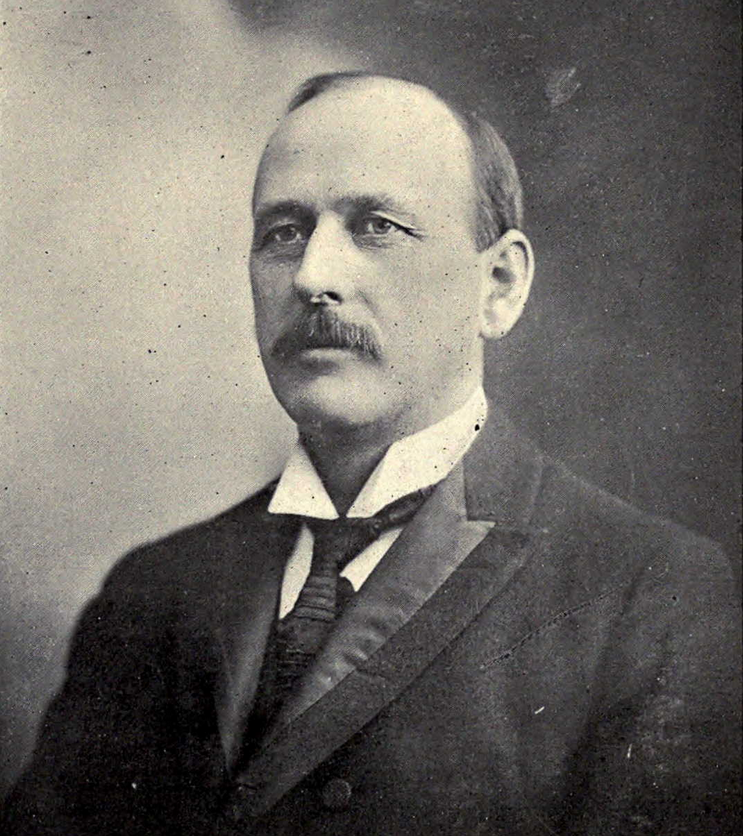
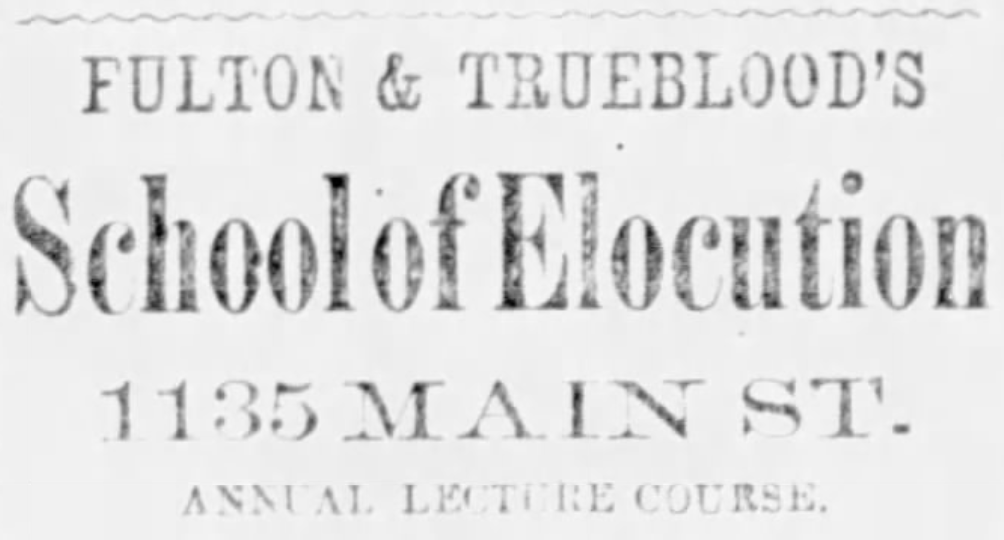
As the Kansas City School of Oratory (pictured below) flourished, so did Professors Fulton and Trueblood. By 1890, Fulton balanced teaching at three universities in addition to operating his school in Kansas City, while Trueblood went to the University of Michigan.[iv] Fulton was now the founder and dean of the Ohio Wesleyan School of Oratory, but he was just getting started. He and Trueblood published the Practical Elements of Elocution, and as the 1890s progressed, he developed structures for a national association of elocutionary arts. Fulton provided consults for speakers across the nation, including a popular scholar from the newly renamed Princeton University, Professor Woodrow Wilson.[v]
In the summer of 1893, Fulton acknowledged that he could no longer operate the school that launched his professional ascent. His onetime protégé realized he was in a position to fill the master’s vacated shoes. With the erudite founder gone, enrollment plummeted to twenty-three students.[vi]
Fortunately for those eager students, Dillenbeck was dauntless. A few months after taking over the school, he reincorporated it under his name and moved to a location that would better serve his needs. He cut a fencing class from the curriculum and replaced it with a Shakespeare intensive.[vii] Dillenbeck had a vision: through his art and instruction, his school would make Kansas City a better place.[viii]
In the years to come, Dillenbeck would enroll some of the world’s first film celebrities, and the up-and-coming teenage director from Kinsley, Kansas, Charlie Edwards. Subscribe to Community Arts Uncovered to learn how Dillenbeck’s school of elocution impacted film and theatre in the United States!
[i] The Enchanted Years of the Stage: Kansas City at the Crossroads of American Theater, 1870-1930 by Felcia Londré, 104; Actor Stanislaus Stange “drifted” into Kansas City as an instructor whom Fulton employed for some time at his school. 26 Sep 1886, Kansas City Times. Londré, 76-106. Londré chronicles the vast number of stars that illuminated Kansas City’s stages in her text.
[ii] 27 May 1888, Kansas City Times
[iii] 28 Jul 1885, Kansas City Star
[iv] Ohio Wesleyan, Missouri State, and Kentucky State
[v] Wilson, p. 126; The Journal-Herald, (Delaware, Ohio), 16 May 1916; https://www.rrauction.com/auctions/lot-detail/3352873047773-woodrow-wilson
[vi] 24 Jul 1899, Kansas City Journal
[vii] 15 Jul 1893, KC; 28 Oct 1893, KC
[viii] Dillenbeck’s School of Oratory Catalogue, 1915

 Community Arts Uncovered
Leave a comment